

The origin and development of civil status in Belgium
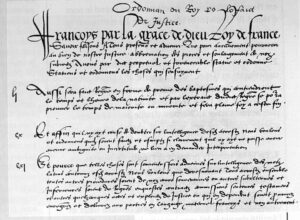
Unlike France, Belgium did not follow the Edict of Villers-Cotterêts, also known as the Ordinance of Villers-Cotterêts, is a major legal text promulgated in 1539 by King François I. It was an essential step in the construction of the modern French state, particularly in terms of administration, justice and personal registration.
Edict of Villers-Cotterêts
 Civil status is the set of official records that enable a person to be legally identified throughout his or her life. It includes birth, marriage and death certificates. In Belgium, civil status was not established gradually on its own, but has its origins in the major political and legal transformations of the late eighteenthᵉ century, particularly under the influence of revolutionary France.
Before the introduction of modern civil status, the registration of individuals was carried out by the Catholic Church (see article on the Council of Trent). Until the end of the XVIIIᵉ century, parish registers were the only official source of information on the population. Priests recorded baptisms, religious marriages and burials in them. However, this system had several limitations. It was primarily religious, which excluded or marginalised certain people, and it lacked uniformity and state control. What's more, these registers did not always guarantee clear legal recognition of civil rights.
A major change occurred in 1795, when the territories corresponding to what is now Belgium were annexed by revolutionary France. At that time, the French authorities undertook a far-reaching administrative and legal reform. In this context, a secular civil registry was introduced in Belgium in 1796. From then on, the registration of births, marriages and deaths was the responsibility of the local authorities, rather than the Church. This reform marked a fundamental break with the past, as the legal identity of citizens became independent of any religious affiliation.
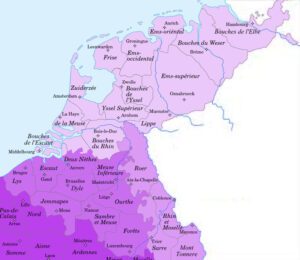
French department in Belgium in 1795
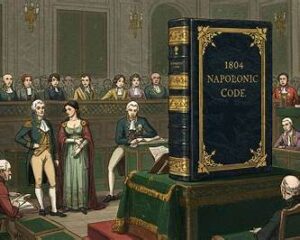 The adoption of the Civil Code in 1804 considerably strengthened this new system. At the instigation of Napoleon Bonaparte, the rules governing civil status were clearly defined and standardised. Civil status records acquired essential legal value: they were used as official proof to establish filiation, family status and the rights of individuals. The Civil Code thus brings great stability and coherence to civil status.
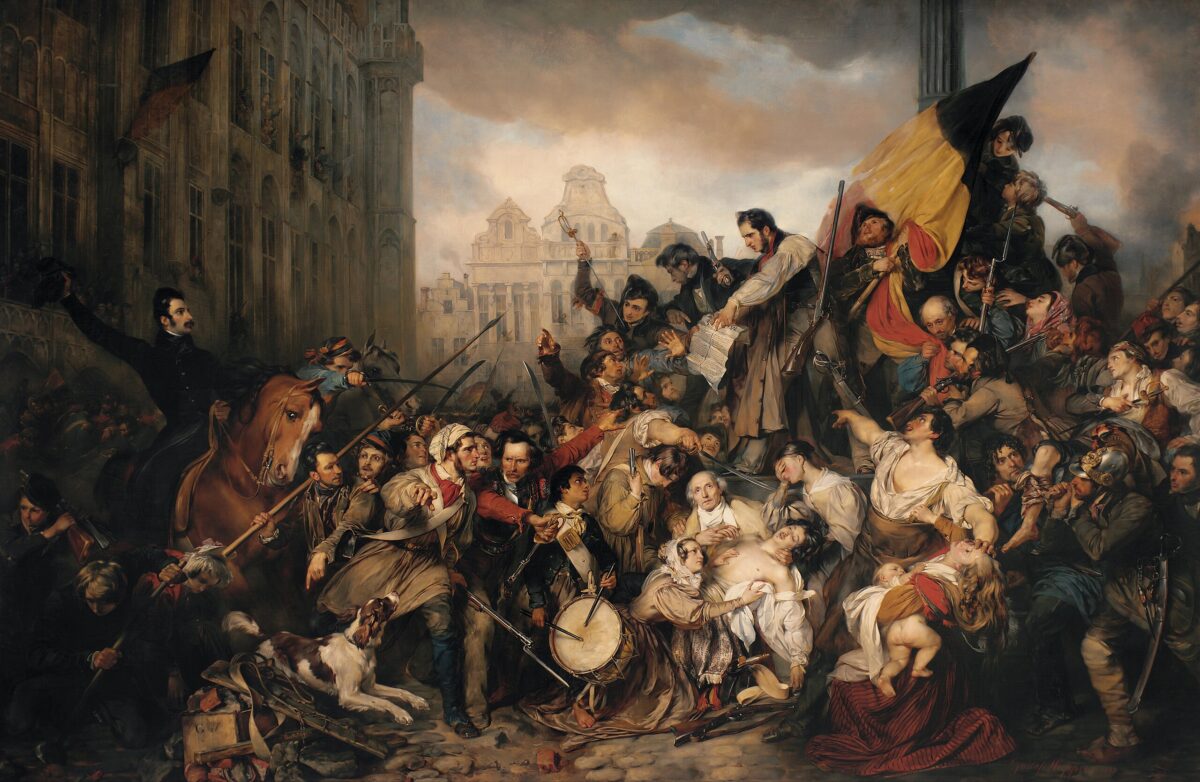
When Belgium gained independence in 1830, the Belgian authorities decided to retain the civil status system inherited from the French period. This decision was based on the efficiency and modernity of this model, which met the administrative and legal needs of the new State. Civil status was gradually adapted to Belgian realities, without calling into question its fundamental principles.
 Today, Belgian civil status is still based on these historical foundations. It is managed by the municipalities and plays an essential role in the lives of citizens, particularly in terms of access to civil, social and political rights. Although registers are now largely digitised and centralised, their function remains the same: to guarantee the legal identity of individuals and ensure the organisation of society.
In conclusion, civil status in Belgium is the direct result of the reforms introduced during the French period at the end of the XVIIIᵉ century. Heir to the Napoleonic model, it constitutes a fundamental element of the administrative and legal functioning of the Belgian State.


