In the XVIIᵉ century, confirmation was clearly affirmed as a sacrament in its own right, distinct from baptism but intimately linked to it.
Its main meanings are :
The full gift of the Holy Spirit
Strengthening baptismal grace
The Christian's public commitment to the faith
Spiritual maturity and the ability to bear witness
Catholic theology placed great emphasis on confirmation as a sacrament of “Christian militia”, preparing the faithful to defend the faith against heresies.
The practice of confirmation in the 17th centuryᵉ century
The minister of the sacrament
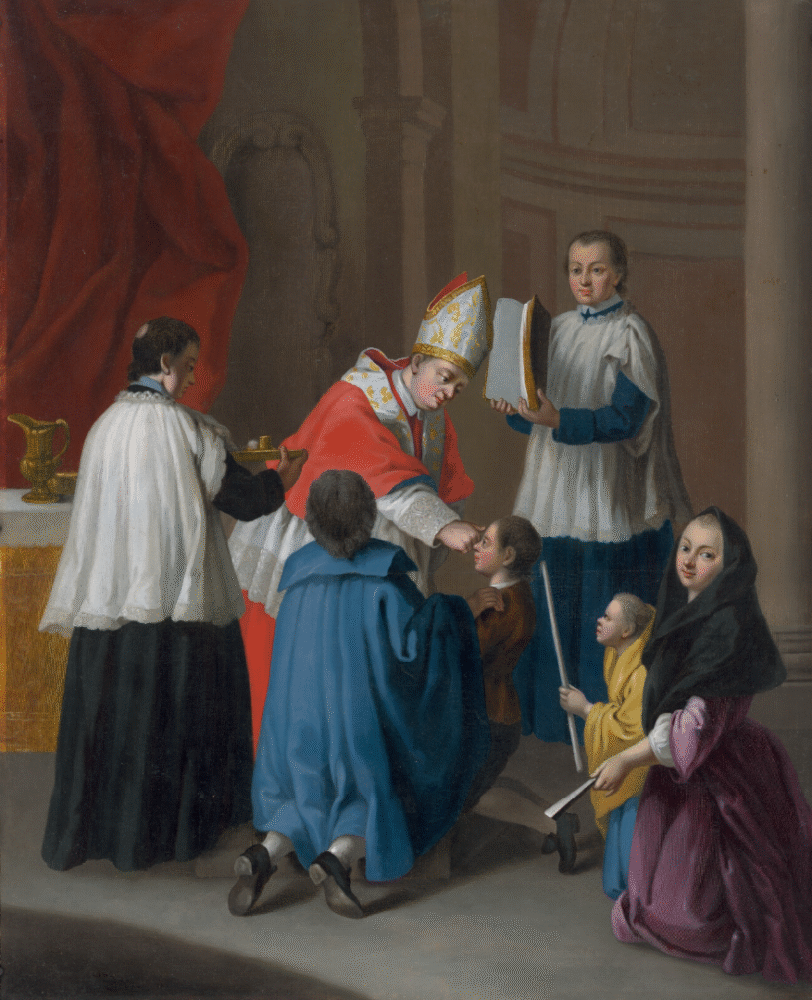
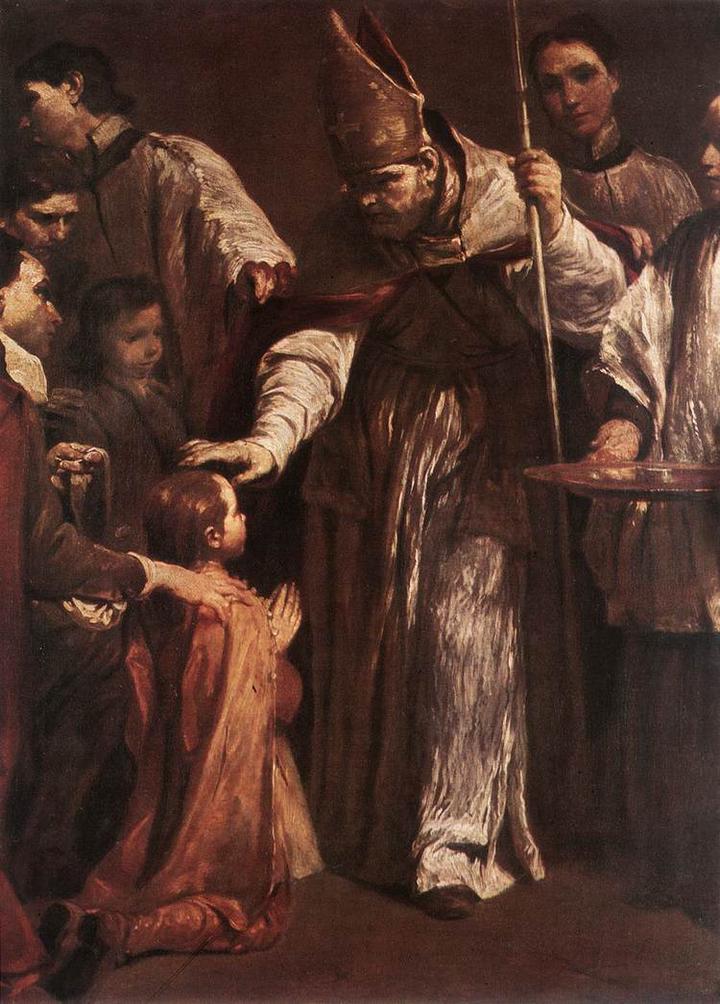
Confirmation is reserved for the bishop, which reinforces its symbolic importance.
It is often conferred during pastoral visits, sometimes several years apart, especially in rural areas.
The age of confirmands
Unlike today, confirmation is generally given:
In childhood or adolescence
Sometimes late, because the bishop didn't come to visit
The idea of an “age of reason” is beginning to gain ground, although there is no universal rule.
The rite includes
Laying on of hands
The anointing of the forehead with chrism
A light pat on the cheek (symbolic), a sign of spiritual strength
The sacramental formula in Latin
Rpastoral and catechetical role
In the XVIIᵉ century, the Church placed great emphasis on :
Pre-catechesis, particularly after the Council of Trent
Religious instruction for children and the faithful
The fight against religious ignorance, seen as a cause of Protestantism
Figures such as Charles Borromeo (late XVIᵉ but very influential in the XVIIᵉ) inspired strict norms on preparation for the sacraments.
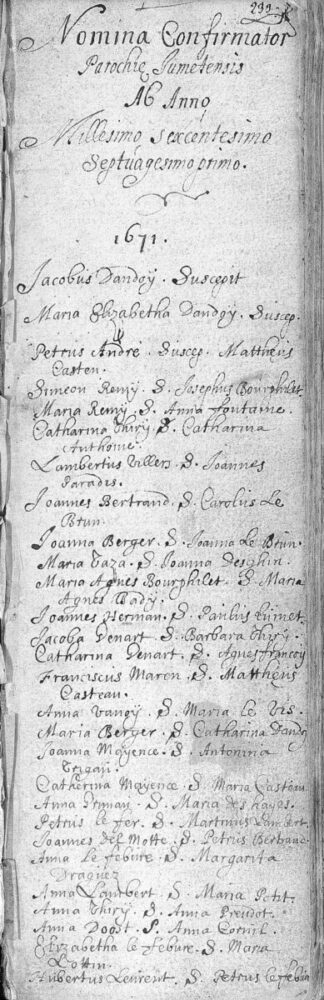
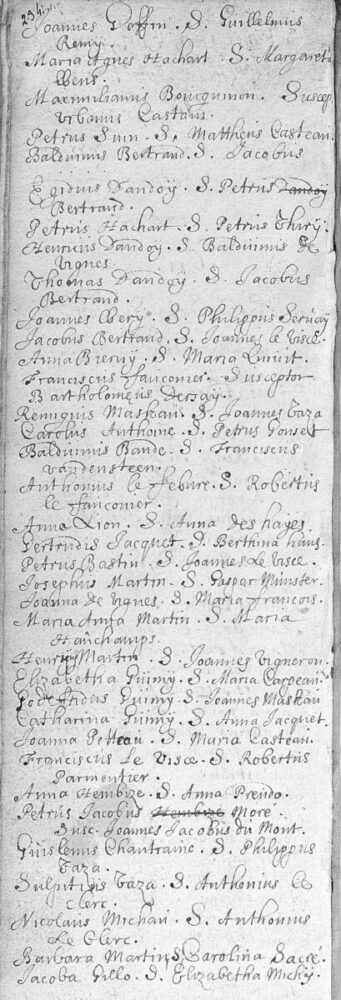
LIST OF CONFIRMS OF JUMET IN 1671 according to the images below
To see the list, click on the link above