

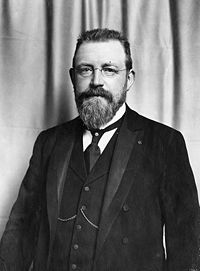
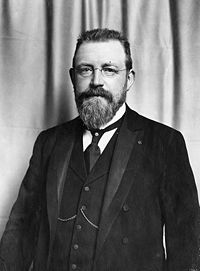
CAPART Jean François Désiré
He played a key role in building up Belgian Egyptian collections and carried out major excavations in Egypt, notably at the Elkab site. A great populariser, he helped to bring ancient Egypt to the attention of the Belgian and international public.
Jean Capart was also a member of numerous learned societies and published several reference works on Egyptian art and archaeology, including L'Art égyptien (1909) and Leçons sur l'art égyptien.
Jean Capart (1877-1947) was a great Belgian Egyptologist, often regarded as the «father of Belgian Egyptology». He helped to spread a passion for Egypt in Belgium and was responsible for enriching the Egyptian collections of the Royal Museums of Art and History in Brussels.
However, he was not a member of Howard Carter's excavation team. He travelled to Egypt shortly after the discovery and was able to visit the tomb and observe the artefacts, but he did not take part in the excavations themselves or in the initial opening of the tomb in November 1922.
Jean Capart : Detailed biography
Jean François Désiré Capart was born in Brussels on 21 February 1877. Fascinated by history and archaeology from an early age, he studied literature at the Université Libre de Bruxelles (ULB), where he specialised in ancient history. In 1900, he became the first professor of Egyptology in Belgium, laying the foundations for the discipline in the country.
At the same time, Capart joined the Royal Museums of Art and History in Brussels as an attaché. Thanks to his dynamism and his contacts with major international institutions (such as the British Museum and the Louvre), he played a decisive role in enriching and promoting Egyptian collections in Belgium.
In 1905, he was appointed inspector of excavations in Egypt for the Belgian government. He organised several archaeological missions, notably to Elkab, a site he excavated on several occasions. Capart contributed to a number of major discoveries, some of which are now on display at the Musée du Cinquantenaire.
He played an active role in bringing Egyptology to the general public, both in Belgium and abroad, through his lectures, articles and illustrated works. He worked with Queen Elisabeth of Belgium, who was passionate about Egyptology, and accompanied her on her famous trip to Egypt in 1923, just after the discovery of Tutankhamun's tomb.
Jean Capart was also a member of the Institut de France and a correspondent of the Académie des Inscriptions et Belles-Lettres. He directed the Queen Elisabeth Egyptological Foundation, which he helped to found in 1923 to promote studies of ancient Egypt.
He died on 16 June 1947 in Etterbeek, leaving an immense scientific and heritage legacy that continues to set the standard today.
Main works by Jean Capart
L'Art égyptien (1909) - a work that remains a classic on the aesthetics and symbolism of Pharaonic art.
Leçons sur l'art égyptien (1924) - compilation of lectures given at the ULB, illustrating the evolution of Egyptian art.
Documents et monuments du Musée Égyptien de Bruxelles (1913-1925) - a multi-volume series detailing the Belgian collections.
La Vie quotidienne en Égypte à l'époque des Ramsès (Daily life in Egypt at the time of Ramses) (1933) - a popular work accessible to the general public, which was a great success.
Tutankhamun: the child pharaoh
(published after his trip to Egypt with Queen Elizabeth) - on the discovery of the tomb and its treasures.
He has also contributed numerous articles to specialist journals such as the Journal of Egyptian Archaeology and Chronique d'Égypte.
The discovery of the tomb of Tutankhamun (or Tutankh-Amon) is one of the most famous events in archaeology.
When and by whom?
On 4 November 1922, the British archaeologist Howard Carter, funded by Lord Carnarvon, discovered the entrance to tomb KV62 in Egypt's Valley of the Kings.
After years of fruitless searching, Carter finally found a staircase leading to a sealed door bearing the seal of Tutankhamun.
Why is it so exceptional?
The tomb is virtually intact, whereas most royal tombs were looted in ancient times. More than 5,000 objects have been discovered, including the famous solid gold funerary mask, a true masterpiece of Egyptian art.
The historic moment :
On 26 November 1922, Carter pierced a small opening in the door of the burial chamber. By candlelight, he saw gold objects and, in response to Lord Carnarvon's question «Can you see anything?», he replied with the famous phrase:
«Yes, wonders!»
Who was Tutankhamun?
Pharaoh of the 18th dynasty, he reigned from 1336 to 1327 BC, coming to the throne at a very young age (around 9) and dying at 18 or 19.
His reign was marked by the restoration of the old gods after the religious heresy of Akhenaten, his probable father.
Archaeological and cultural significance :
The discovery has led to a better understanding of the life and death of the pharaohs, Egyptian craftsmanship and funerary rituals.
It triggered a veritable «Egyptomania» throughout the world.
Would you like to know more about the contents of the tomb, the mummy, or the theories surrounding Tutankhamun's death?
The discovery of the tomb of Tutankhamun (or Tutankh-Amon) is one of the most famous events in archaeology.
When and by whom?
On 4 November 1922, the British archaeologist Howard Carter, funded by Lord Carnarvon, discovered the entrance to tomb KV62 in Egypt's Valley of the Kings.
After years of fruitless searching, Carter finally found a staircase leading to a sealed door bearing the seal of Tutankhamun.
Why is it so exceptional?
The tomb is virtually intact, whereas most royal tombs were looted in ancient times. More than 5,000 objects have been discovered, including the famous solid gold funerary mask, a true masterpiece of Egyptian art.
Archaeological and cultural significance :
The discovery has led to a better understanding of the life and death of the pharaohs, Egyptian craftsmanship and funerary rituals.
It triggered a veritable «Egyptomania» throughout the world.
Genealogy Capart Jean François Désiré
Further information on CAPART Jean François Désirée : https://www.facebook.com/jmbruffaerts/


