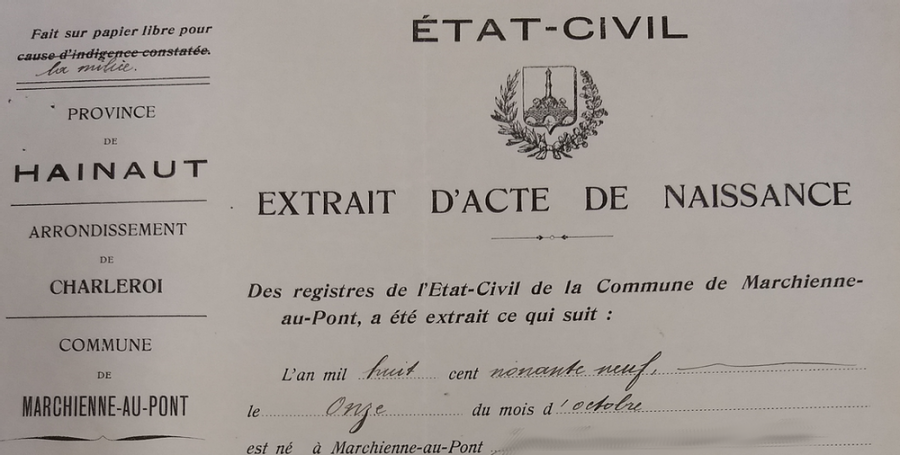
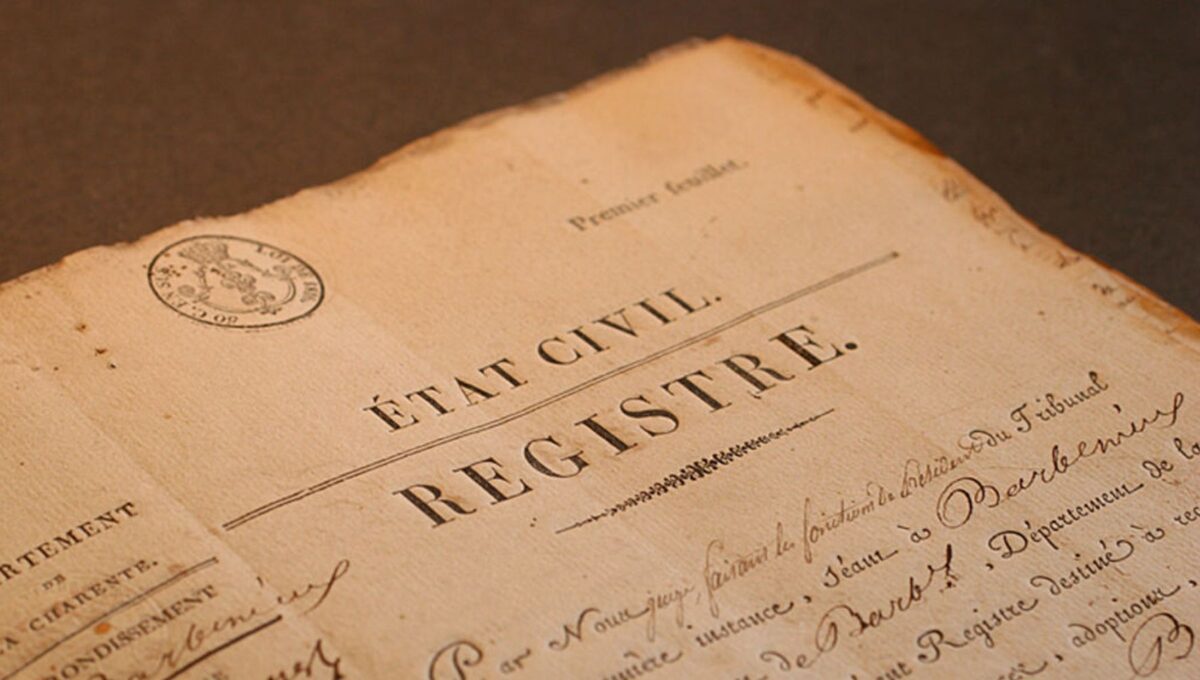
Civil status is to determine the status of man in society and to enshrine, in his own interest and in that of families and society, the rights he acquires and the obligations he incurs or transmits by birth, marriage or death.
Civil status documents
The documents used to record this status, and the officials responsible for drawing up these documents and keeping the registers containing them, are called civil registrars.
Art. 109 of the Belgian Constitution places the drawing up of civil status records and the keeping of registers within the exclusive remit of the municipal authorities.
Article 93 of the law of 30 March 1836 stipulates that the college of burgomasters and aldermen is responsible for keeping these registers.
The burgomaster, or an alderman appointed for this purpose by the college, performs the duties of civil registrar, and is particularly responsible for ensuring that everything relating to the acts and the keeping of the registers is accurately observed.
See also. Commentary on municipal law, sub art. 93. We have explained there what happens if the civil registrar is unable to act.
See chapter III below. The responsibility of civil registrars (nos. 58 and 59).
Legislation relating to civil status is contained in Title II, Book I of the Civil Code (1).
SECTION II. Civil status records in general.
§ 1 Keeping, publicising and preserving registers.
2. Place of registration. - Register formalities.
Art. 40, C. civ. - Civil status records will be entered in each municipality in one or more registers kept in duplicate.
Art. 52. - Any entry of these deeds on a loose-leaf, or otherwise than on the registers intended for this purpose, will give rise to damages for the parties, without prejudice to the penalties provided for in the Criminal Code.
Art. 192 of the Criminal Code. - Civil registrars who enter their records on simple loose-leaf sheets will be punished by imprisonment of at least one month and at most three months and a fine of between 16 fr. and 200 francs.
In practice, separate, duplicate registers are generally used for births, marriages and deaths.
Art. 63 also requires that a register (i.e. not a duplicate register) be kept of marriage publications.
The purchase and maintenance of registers is a compulsory expense for local authorities.
(Art. 131, no. 1, of the municipal law).
Art. 41, C. civ. - The registers shall be numbered by first and last page and initialled on each page by the President of the Court of First Instance or by the judge who replaces him.
Art. 4, § 1. - The registers will be closed by the registrar at the end of each year (31 December).
The closing formula can be expressed as follows:
«The present register containing (indicate the number in words) records of ... was closed and closed today ... (date in words) by me ... civil registrar of ...».»
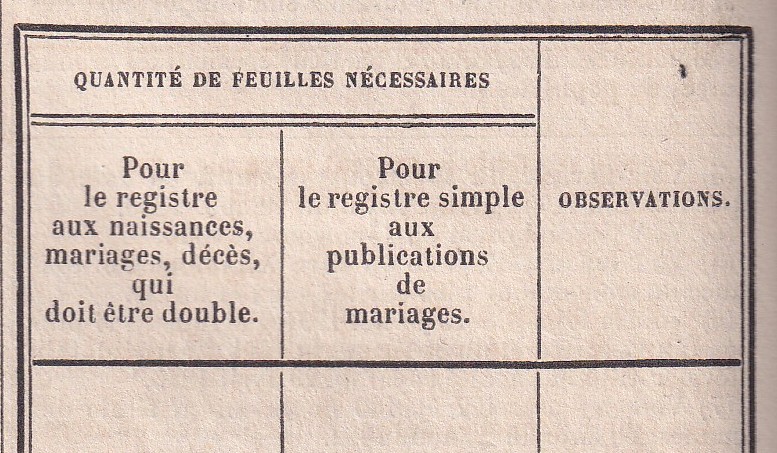
The registers are sent to the communes by the governor of the province, to whom the burgomasters send a statement indicating the number of sheets required, drawn up according to the following model: